
Environmental zones are appearing more and more often in Dutch cities. They are intended to improve air quality and keep city centres liveable. For truck drivers and transport operators, this immediately raises practical questions. Are you allowed to drive everywhere? What happens if you enter an environmental zone in an older truck? And what is set to change with the introduction of zero-emission zones?
In this article, we clearly explain everything, especially for everyone who drives for a living.
What is an environmental zone for trucks?
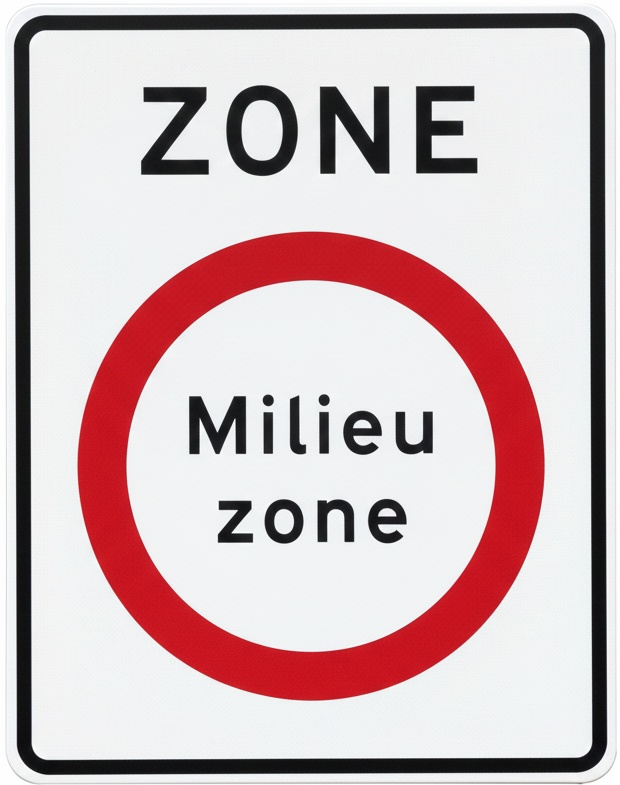
An environmental zone is an area where older, more polluting vehicles are not allowed. This applies especially to trucks, as they emit more than passenger cars. Municipalities decide for themselves how strict their zones are and which vehicles are allowed in. In practice, this means vehicles below a certain Euro class are banned.
Why are low-emission zones becoming stricter?
In recent years, there has been a lot of focus on clean air and healthier cities. City centers are facing problems such as particulate matter, nitrogen emissions and noise pollution. Municipalities use low-emission zones to reduce these problems and are increasingly moving towards fully zero-emission urban logistics. As a result, the rules for trucks are automatically becoming stricter.
Which cities have low-emission zones for trucks?
Environmental zones are not the same everywhere. The following municipalities now have access rules for freight traffic:
- Amsterdam
- Arnhem
- Breda
- Delft
- Maastricht
- Maasvlakte Rotterdam
- Rijswijk
With the introduction of zero-emission zones, the low-emission zones for diesel trucks have been discontinued in the municipalities of Den Haag, Eindhoven, Haarlem, Leiden, Rotterdam, Tilburg, Utrecht and ‘s-Hertogenbosch.
The exact requirements vary from city to city. It is therefore a good idea to check the rules in advance for the destination where you need to unload or load. This will help you avoid surprises along the way.
Which trucks are allowed in?
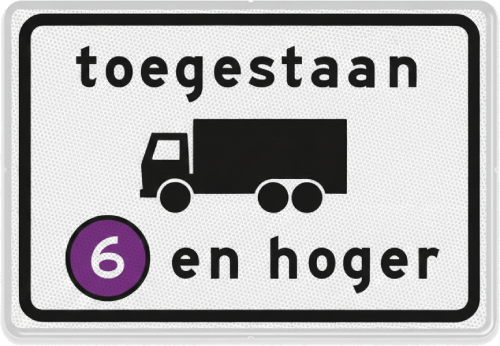
Access to an environmental zone is almost always determined by your vehicle’s Euro class. This ranges from Euro 0 (the oldest) to Euro 6 (the cleanest). In most cities, only Euro 6 vehicles are allowed without restrictions. Euro 5 vehicles may still be allowed in some places, but increasingly often they are not. In most cases, access for Euro 4 and lower is permanently prohibited.
Municipalities monitor this using license plate cameras. If you drive into a low-emission zone in a truck that does not meet the requirements, a fine is automatically issued.
Exemptions
Sometimes you can still get access to a low-emission zone, for example if you need to visit an area occasionally, have a specialist vehicle or are in the process of replacing your fleet. Municipalities offer exemptions for this, but the conditions vary considerably. It’s always a good idea to check in advance, so you can be sure you’re driving into the city legally and without risk.
Zero-emission zones
From 2025, more and more cities will introduce zero-emission zones. Only fully electric or hydrogen-powered trucks will be allowed in these areas. For businesses, this means that their fleet will eventually need to be replaced or converted. The transition won’t happen overnight, but it’s wise to start planning now, especially if you regularly need to travel into the city centre.
What does this mean for drivers and business owners?
For drivers, this mainly means that good preparation is becoming increasingly important. Routes should be checked in advance, and it is useful to know exactly what Euro class your vehicle is. Businesses will also need to consider investments and the future of their fleet. The transport sector is changing, and low-emission zones are becoming a permanent part of it.
In short
Low-emission zones are becoming increasingly strict and have a major impact on truck traffic in Dutch cities. By knowing what to expect and which rules apply, you can avoid fines, delays and hassle. With the introduction of zero-emission zones, another major change is on the way. If you prepare well, you can keep driving without any problems.